
THE FEMALE HEALTH HUB


WELCOME
It’s time to understand our bodies better, break down barriers and remove the taboos around female health. We want every woman and girl to feel confident in her own skin. Because when you feel empowered by your body rather than held back by it, you thrive on the pitch and play your best game.
70%
of girls admit to avoiding sport during their period
(Women in Sport 2022)
90%
want more education to help reduce injury risk in the women’s game
(Well HQ 2023)
Boobs can bounce up to
11,000
times during a 90 minute football match
(Scurr 2022)
Here you’ll find practical advice, real stories and expert guidance backed by specialists, to help you understand your body and feel confident playing football, whatever stage you’re at.
No judgement. Just support, high-quality information and the reassurance that your Body is Made for this Game!
The hub has been a game changer! It’s clear, relatable and actually helps you understand your body. I feel more confident, more in control and not alone.
Menstrual Health
Your menstrual cycle is an important part of your health and your experience on the pitch, not something to hide or push through in silence.
We’re breaking down the facts around periods, hormones and symptom management to help you understand exactly what’s happening in your body and master your menstrual cycle.
TRACKING YOUR CYCLE
As a football player, tracking your own cycle will help you to better understand your experience and navigate your symptoms, and can be hugely beneficial to your wellbeing and performance.
WHY TRACK?
- Tracking your cycle helps you to better understand yourself, plan ahead, and better predict when your next period will arrive
- Tracking your cycle is also a great health check: a regular period and mild, manageable symptoms are good signs of health
- Knowing what normal look likes to you allows you to identify any changes, which can be shared with a healthcare professional if needed
- Tracking helps you develop cycle resilience. I.e, it helps you identify any symptoms that are challenging, when they happen, and gives you an opportunity to manage them better. Check out 'Symptoms and Solutions' for ideas on how you can do this
HORMONAL CONTRACEPTION
When using hormonal contraception, e.g. the pill, implant or IUD (interuterine device), the menstrual cycle is suppressed, and the bleed women have on the pill is known as a withdrawal bleed. Therefore, if you are a player using hormonal contraception you cannot use your period as a sign of health, and should instead use other indicators such as weight loss or recurrent illnesses. However, players using hormonal contraception will still benefit from tracking their cycle to understand and better manage their symptoms.
Confidentiality
You should not feel pressured to share your menstrual cycle information with anyone if you do not wish to do so.
What should tracking include?
There are lots of different ways you can track your menstrual cycle by using apps, making daily notes, or using a calendar. The day your period starts is day 1 of your cycle.
DAY OF CYCLE
E.g. Day 1, day 2, etc.
FLOW
E.g. Light / medium / heavy
SYMPTOMS
E.g. Level of severity
Additional things to track
EXERCISE AND PHYSICAL ACTIVITY
Volume, intensity and type
MOTIVATION
To exercise and train
RECOVERY
Time and niggles
EMOTIONS
Mood and feelings
LIFESTYLE
Nutrition and hydration
SLEEP
Quality and length
MANAGING YOUR FLOW
Manage your flow your way - tap a tile to see how each option works
Pros
Cons
DON'T CONTINUE TO SUFFER
If your symptoms become unmanageable and are affecting your day to day life, you need to visit a GP for advice and further support.
Yoga for Female Footballers
A gentle yoga session designed to ease PMS symptoms and help you feel more like yourself, on and off the pitch.
Breast Health
Looking after your breasts is a vital part of your everyday life, both on and off the pitch.
From finding the right bra to getting the support that works for you, here’s practical guidance to help you feel confident, informed and in control. No jargon, just real advice you can use.
SPORTS BRA STYLE GUIDE
FINDING A BRA TYPE THAT WORKS
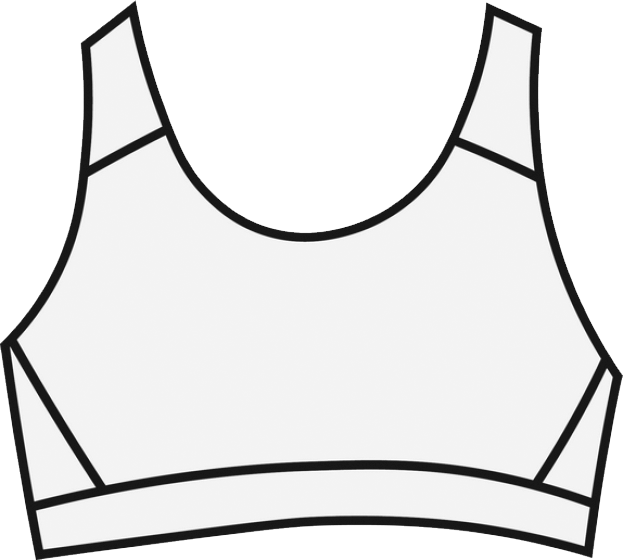
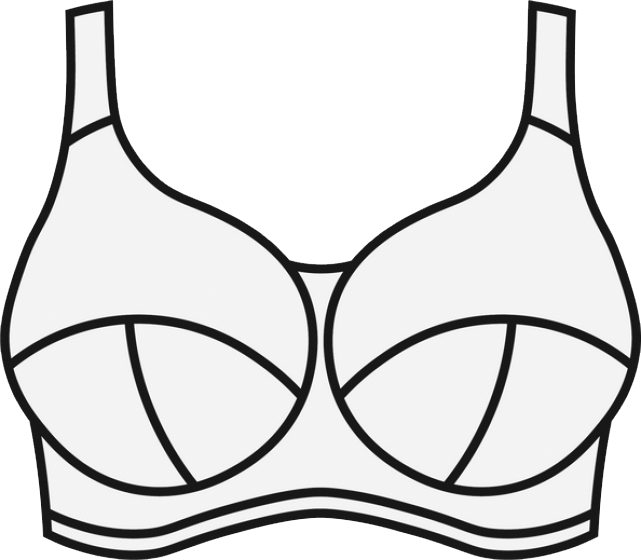
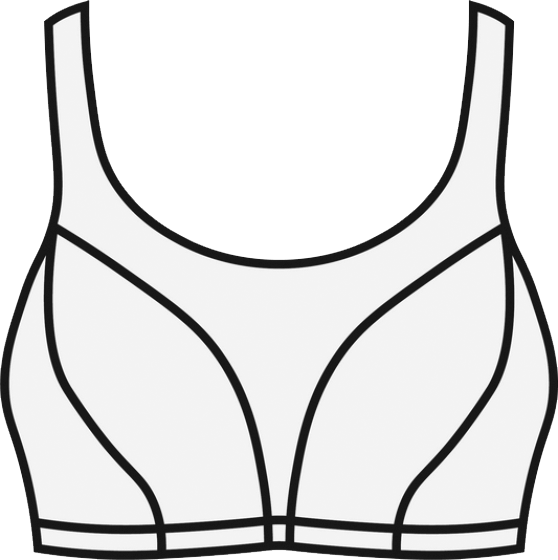
There are 3 types of sports bra and their suitability for players varies depending on breast size and type of exercise being undertaken.
COMPRESSION BRA
Best for cup size:
- Crop top style, made of stretchy fabric and goes on over the head
- Compresses the breast tissue towards chest
- Little or no adjustability
- Recommended for smaller cup sizes
- Only suitable for larger breast sizes when doing low-impact exercise
ENCAPSULATION BRA
Best for cup size:
- Separate cups support each breast individually
- Fabric has less stretch
- Adjustability in the straps and underband
- Can be back or front-fastening
- Recommended for larger cup sizes and high impact exercise
COMBINATION BRA
Best for cup size:
- Combines the features of encapsulation by supporting each breast individually but also offers a layer of compression too
- Has underband and strap adjustability
- Suitable for larger breast sizes and higher impact exercise
GETTING THE RIGHT FIT SPORTS BRA
STEP 1
GET AN INDICATION OF YOUR BRA SIZE
- Measure under your breasts, around your rib cage (underband - inches)
- Measure around the fullest part of your bust across the nipple line (inches)
- Subtract the underband measurement from bust measurement. Use the chart below to convert that difference (inches) into your cup size
Top Tip
All bra brands and styles vary greatly in their sizing, therefore always follow the 5-point check to ensure you are in a great fitting sports bra.
| +1 | +2 | +3 | +4 | +5 | +6 | +7 | +8 | +9 | Difference (in) |
| A | B | C | D | DD | E | F | FF | G | Cup size |
STEP 2
THE 5-POINT SPORTS BRA FIT
1. STRAPS
The straps should be adjusted to be comfortable - not so tight they dig in the skin and not too loose that they sag or slip. If they dig in throughout the day but still feel "loose", it's probably because the bra isn't strong or supportive enough for the weight of your breasts. Look for sports bras that have a racer or cross back (note: some bras have shoulder straps that can be fastened into a racer back). This style avoids pressure being put through straps straight over the shoulders, a site vulnerable for nerve compression, while encouraging better posture.
2. UNDERBAND
The underband needs to sit flush and firmly against the body. It shouldn't pinch or dig in, and you should be able to fit just two fingers between your body and the band. You should be able to take a big deep breath without feeling restricted.
3. CUPS
The fabric of the cup should enclose all of the breast tissue. Breasts should not bulge out of the top, sides or under the arm, nor should there be loose fabric as it suggests the cups are too big.
4. UNDERWIRE
Not all sports bras have underwire, but if they do, the wire should follow the natural crease of the breast and not rest on, or dig into, any of the breast tissue.
5. FRONT
The lower edge between the cups should sit flat against your body. If the centre front digs into the breast tissue then go up an underband size. If the centre front sits away from the body, try going up a cup size. But if the centre front sits away from their chest - the cups might be too small.
STEP 1
GET AN INDICATION OF YOUR BRA SIZE
- Measure under your breasts, around your rib cage (underband - inches)
- Measure around the fullest part of your bust across the nipple line (inches)
- Subtract the underband measurement from bust measurement. Use the chart below to convert that difference (inches) into your cup size
Top Tip
All bra brands and styles vary greatly in their sizing, therefore always follow the 5-point check to ensure you are in a great fitting sports bra.
| +1 | +2 | +3 | +4 | +5 | +6 | +7 | +8 | +9 | Difference (in) |
| A | B | C | D | DD | E | F | FF | G | Cup size |
STEP 2
THE 5-POINT SPORTS BRA FIT
1. STRAPS
The straps should be adjusted to be comfortable - not so tight they dig in the skin and not too loose that they sag or slip. If they dig in throughout the day but still feel "loose", it's probably because the bra isn't strong or supportive enough for the weight of your breasts. Look for sports bras that have a racer or cross back (note: some bras have shoulder straps that can be fastened into a racer back). This style avoids pressure being put through straps straight over the shoulders, a site vulnerable for nerve compression, while encouraging better posture.
2. UNDERBAND
The underband needs to sit flush and firmly against the body. It shouldn't pinch or dig in, and you should be able to fit just two fingers between your body and the band. You should be able to take a big deep breath without feeling restricted.
3. CUPS
The fabric of the cup should enclose all of the breast tissue. Breasts should not bulge out of the top, sides or under the arm, nor should there be loose fabric as it suggests the cups are too big.
4. UNDERWIRE
Not all sports bras have underwire, but if they do, the wire should follow the natural crease of the breast and not rest on, or dig into, any of the breast tissue.
5. FRONT
The lower edge between the cups should sit flat against your body. If the centre front digs into the breast tissue then go up an underband size. If the centre front sits away from the body, try going up a cup size. But if the centre front sits away from their chest - the cups might be too small.


BRA FITTING:
What to expect
Breast health is essential for your wellbeing, yet most women and girls don't know their correct size or what style of bra is best for them. A bra that fits properly can improve your comfort and your physical performance. Some retailers will offer a fitting service to help you get the right bra type and size for you and it's important that you know what to expect from these services.
CONSENT
Before any assessment, your bra fitter should gain informed consent.
This means that they should:
- Fully explain what they are about to do and why
- Give you the opportunity to ask any questions
- Obtain your consent before proceeding
A CONVERSATION
The fitter will talk to you about any issues you currently have with breast support and bra fit and if appropriate, may offer to assess how different styles and sizes of bras fit you. The fitter should fully explain what they are about to do, give you the opportunity to ask any questions and obtain your consent before proceeding.
THE APPROPRIATE PROCESS
Bra fitting and measuring should always be carried out over a layer of clothing, this may be a t-shirt or a bra.
PRIVACY
If you are trying on different bras, you should always have complete privacy available to change before the fitter comes in to complete the fit check.
STRAPS AND UNDERBAND
The fitter may check your strap and underband with their fingers to get a better idea of the fit. They will also need to check the back of the bra so may ask you to turn around.
PHYSICAL INTERACTION
If you prefer, bra fits can be completed without touching you at all. They can also be done over a t-shirt if needed.
TESTING THE BRA
The fitter may ask you to move around if you feel comfortable. This is to check the support is suitable for you and make sure nothing is rubbing.
RESULTS
For optimum results, bra fitting specialists will need to look at you in your bra to check the fit. Bra fitting will never require you to remove your bra for observation or touch assessment.
YOUR RIGHTS
You have the right to bring a friend or relative with you to a sports bra fitting.
You can refuse any assessment that you are not comfortable with.
You can change your mind and withdraw your consent at any point during the assessment.
You should report any behaviour that you view as inappropriate or makes you feel uncomfortable.
You can find where to report by looking at an organisation's website, or you can talk to the manager.
Lionesses Unfiltered: Breast Health
Hear from Chloe Kelly, Niamh Charles and Whitney Adebayo, alongside Dr. Jo, sharing powerful facts and honest truths about breast health.
Injury Prevention
Whatever your age or experience, our practical advice and content is here to help support your body to meet the demands of football.
DEVELOPING RESILIENT BODIES FOR FOOTBALL
WHY?
- Strong healthy bodies are so important for female players for both injury resilience and to optimise performance
- Whilst injury isn't always preventable, it is also not inevitable. Many risk factors can be reduced through the correct training and coaching techniques and ensuring you are physically prepared to play
- Whilst injury is complex and there are many factors at play, these top tips will help players develop strong resilient bodies for football
Top tips

WARM-UPS
Research shows that implementing structured, dynamic warm-ups to prepare the body for activity focused on key muscle groups used in football can be a powerful strategy in reducing the risk of injury. The key to a successful warm-up programme is that:
- It is performed consistently, at least three times per week for 10 minutes. If you don't play football this often, taking the time at home or in the gym to complete the activities is key
- Players understand and focus on adopting the correct body positioning and movement mechanics when performing the exercises

STRENGTH TRAINING
Regular strength training is vital for female players of all ages for healthy bones, muscles, and overall injury resilience.
- Alongside time spent on the pitch, dedicate some time at home or in the gym to focus on strengthening, stretching and coordinating key muscle groups including your quads, hamstrings and glutes
- Practise fundamental movement skills like hip hinging, squatting, jumping and landing, accelerating and decelerating. Exercises can be performed using body weight only, and can be progressed by increasing the number of reps, sets or speed of the movement. Only use weights if you have been shown how to do this correctly by a trained professional

CONSISTENT, QUALITY NUTRITION
- What you eat is the foundation for good health and for physical and emotional wellbeing; it fuels movement and exercise, so it's a non-negotiable for great training and to optimise your performance and recovery
Female players should follow these top tips:
- Eat regular meals/snacks - avoid long gaps to maintain energy
- Try and plan meals/snacks around school, work, and training
- Carry healthy snacks (fruit, nuts, wraps, yoghurt) if you are away from home
HYDRATION
- Good hydration (around 2.5 litres daily) is crucial to support fluid balance, gut function, and pelvic floor health
KIT AND EQUIPMENT
- Wearing the correct sports bra helps prevent discomfort and potential long-term damage to breast tissue
- Consider purchasing female specific football boots - the differing height, weight, foot structure, muscle mass, power, and speed between males and females means the technical design of the football boot needs to be different to be fit for purpose for women, and this may help prevent injury
Lionesses Unfiltered: Injury Resilience
Anita Asante, Dr. Stacey Emmonds and Dr. Rebekah Jade break down the myths, share expert guidance, and reveal the facts to help reduce injury risk.
Looking to build your injury resilience but not sure where to start? Check out Prep to Play!
Prep to play
Prep to Play – A: Animal Shapes and Fundamental Movements
Complete the ABCDEF movements in order before training to build a stronger body for football. This prep to play routine will take approximately 10–15 minutes.
 Built with Shorthand